AI Rankings Keep Changing. What Should You Do Next?
Nixal's view: An AI answer can cite your page and still leave your brand out. Before spending more on content, check what the answer actually says and whether it addresses a customer need your business can serve. Monitoring should help you choose the next action.
Ahrefs encountered this distinction while testing promotional content for its conference, Ahrefs Evolve. In its published experiment, among the AI answers that cited its conference-promoting pages, 43% did not mention the conference at all.
The page earned a citation. The event it promoted was absent.
That leaves a more useful question than "Did our visibility go up?": What happened in the answer—and is there anything worth changing?
This is Ahrefs's report of its own experiment; we have not independently reanalyzed the data.
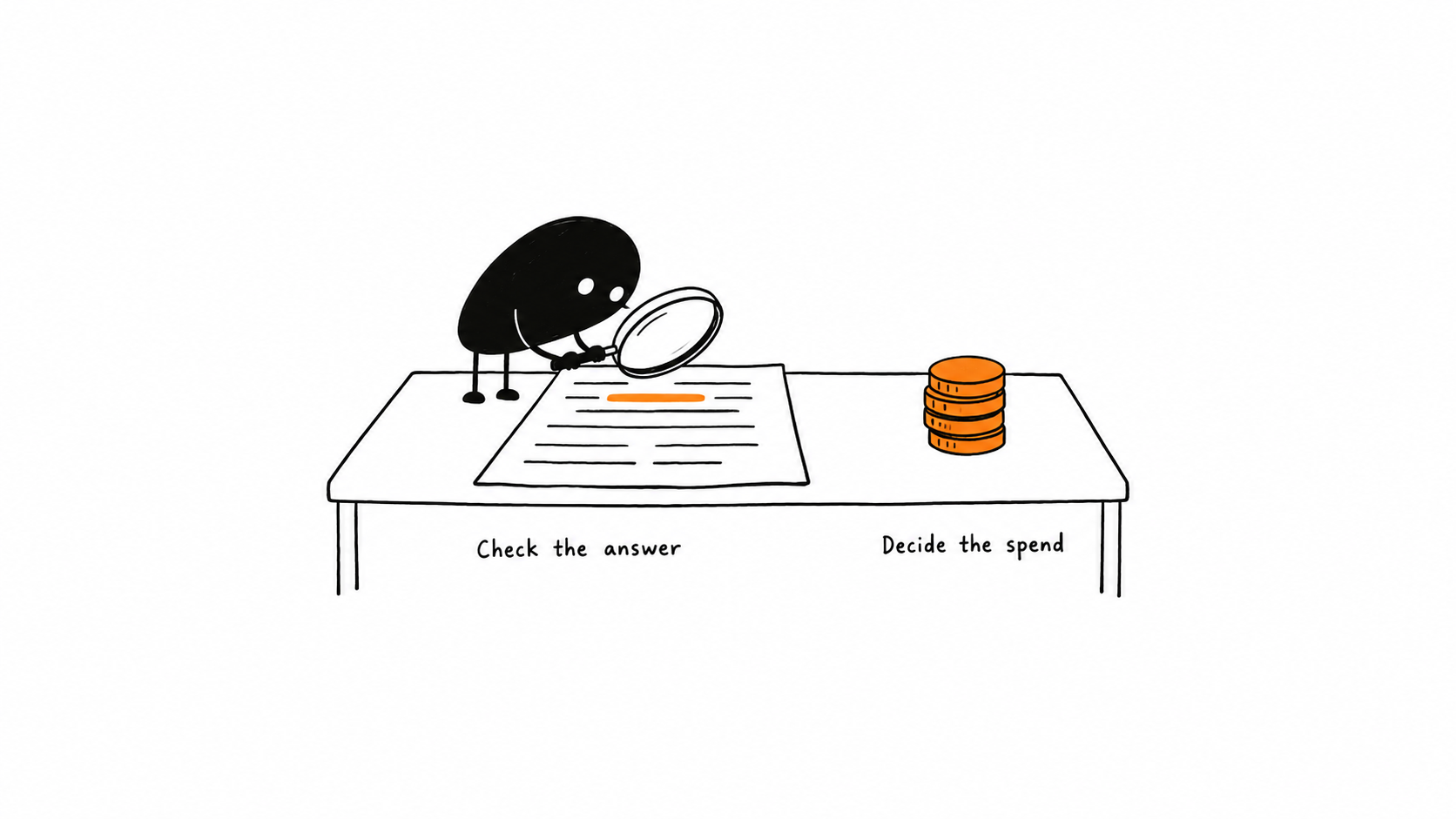
Start with the answer that could change a customer's understanding#
A lower position is an observation. So is an answer that leaves out a product capability. They should not automatically create the same task.
Before investigating, identify the customer question and why it matters to the business. Does the company actually serve that need? Is the answer helping someone understand a product, compare alternatives, or choose a provider? A missing brand in an explanation that does not call for suppliers is different from an inaccurate description in a relevant buying comparison.
Open the answer behind the alert. Keep the prompt, platform, date and available sources attached to it. Read what the answer says about the company, rather than only checking whether its name or domain appears. Our AI visibility measurement guide explains the distinctions between mentions, citations and recommendations; here, the purpose is to decide which observation deserves closer inspection.
A record worth investigating should let another person understand the discrepancy without accepting the dashboard's interpretation first. It should identify the particular statement or omission, the customer need, and the fact or existing page against which the answer can be checked.
Use the Ahrefs example to frame an investigation, not copy a tactic#
Ahrefs published 34 promotional pages and analyzed 9,886 answers across ChatGPT, Gemini, Perplexity and Copilot between February 7 and May 31, 2026. The 43% figure applies to answers citing its conference-promoting pages, not to all answers collected. The experiment involved the company's own brands and measurement tool.
The reported conference result gives us a concrete starting point: some answers cited a promotional page without mentioning the conference. It does not establish that another promotional page was needed.
Our proposed review would begin with those answers and their cited pages. What question was each answer addressing? Was the conference relevant to the audience, location and dates in that question? What information did the cited page provide, and what did the answer actually say? The presence of a citation does not establish which passage influenced the answer or why the conference was omitted.
Those checks distinguish different possible findings. If the page contains a wrong event date, there is a verifiable fact to correct. If the page is accurate and the answer addresses a different audience, there may be no justified content change. If the available records do not explain the omission, the finding can remain unresolved.
These are review criteria, not findings we claim to have made about Ahrefs's pages. We have not audited those pages individually or tested a remedy. The value of the example is the question it raises: what exactly would we be trying to change—page citations, relevant brand mentions, or the accuracy of the answer?
Separate a reason to investigate from a reason to invest#
We recommend matching the next action to what the evidence supports. A small factual check does not need the same justification as a new content program.
| What the team has established | What that can support |
|---|---|
| An answer contains a business-relevant discrepancy, with a record that can be reviewed. | Check the statement against product facts and existing information. Do not yet assume a content gap. |
| A company-controlled page contains a confirmed factual error. | Correct the page for readers. A visibility increase is not a prerequisite for fixing inaccurate information. |
| A relevant customer question is inadequately answered by existing content, with product evidence available to support a better answer. | Scope a revision or new page, identify its owner and consider the cost. The content need is supported; an AI recommendation gain is still uncertain. |
| The answer varies, but no factual problem or useful content change has been established. | Keep the observation, review comparable records where useful, or defer action. Do not create a publishing task merely to close the alert. |
This is Nixal's proposed way to allocate attention and work, not a validated formula for improving AI visibility. A repeated observation may justify more investigation, but repetition does not supply missing product facts or establish demand. For the writing decision itself, see whether to update an existing page or publish a new one.
Keep the question set and the data source visible#
Changing rank does not necessarily mean that all information in the observations is useless. SparkToro's research with Gumshoe reported City of Hope in 69 of 71 relevant ChatGPT answers, but first in only 25. Those are different descriptions of the same set of responses, not evidence of the hospital's clinical quality.
The work collected responses in late 2025, involved a visibility-tool company, and left questions about sample size, prompt diversity and API versus user-facing results unresolved. It supports examining repeated presence separately from order; it does not establish a universal number of runs or validate every tool's question set. Our guide to repeated AI queries covers that sampling decision.
Repeated runs of a narrow set of prompts still describe that set. Keep customer needs and the observed questions connected, and separate changes in the answers from changes in what you chose to monitor.
The origin of the data matters as well. Google describes query fan-out as related searches that its AI features may issue across subtopics and data sources. That explanation does not establish that a third-party list contains the complete searches from a particular answer. Distinguish disclosed retrieval queries from simulated expansions and from the user's original question. Simulated questions can help generate hypotheses; presenting them as observed demand would change the claim.
Decide how to review a change before calling it a success#
Before implementing a change, write down what is wrong or missing, what will change, who will do it, and what the later review can establish. Keep the record proportionate to the work: a factual correction may need only the original statement, the authoritative fact, the edited URL and its date.
Then separate three checks. Was the intended page corrected? Did comparable AI answers change? Did the business observe a relevant response, such as qualified inquiries? Those questions require different records. Answering the first does not answer the other two.
Even first-party reporting has interpretation limits. Bing's description of Citation Share and Compare defines citation share within a grounding query and explicitly distinguishes it from ranking and traffic share. Its comparison guidance also identifies other possible influences on change, including models, competing content and demand. A before-and-after chart should therefore begin a review, not finish the explanation.
Keep observations that did not improve as well as those that did. Record changes in the monitored questions or platforms. If the answer is now more accurate, say what improved; if the edit's contribution is uncertain, preserve that uncertainty instead of turning the sequence into a success story.
The useful output of monitoring is a finding someone can examine and a next step they can justify. Sometimes that is a correction, sometimes a content revision, and sometimes a decision to leave the page alone. A report earns its place when it helps the team make that distinction.