2 Months Into GEO With Little Change: What Did Teams Seeing Quick Results Fix?
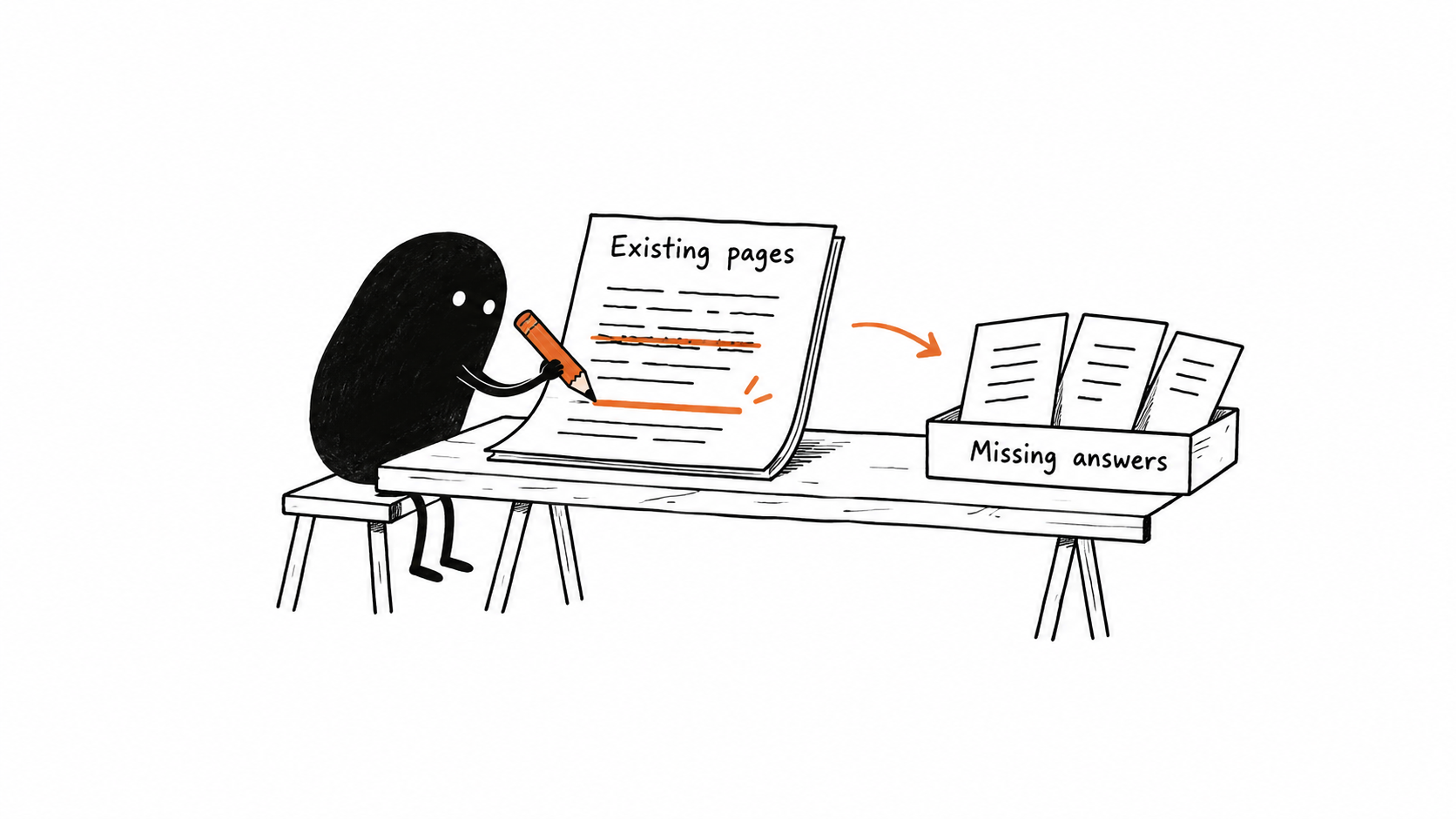
Nixal's recommendation: if GEO work has produced little change after a period of investment, audit the existing website first. Check whether business descriptions are accurate, important content is readable, and pages answer real customer questions. Prioritize correcting and refreshing existing pages, then fill the missing content. When a new page or article is needed, let the gaps you find determine the topic.
3 articles a week, sitewide schema, directory listings, press releases, and leadership posts on LinkedIn. 2 months later, AI still gets the business wrong.
A Reddit user described that frustration at a B2B services company in a niche industry. The company had completed that work and was tracking AI answers. Citations and brand mentions remained largely flat, while AI frequently placed the company in an adjacent industry it did not belong to. The user wanted to know how soon others saw changes and whether onsite work or third-party mentions helped. Original post
How quickly can GEO results appear?#
Published cases show changes within days or weeks after targeted work. J.O.E. reported new landing pages appearing in AI answers on day 3 after its preparation phase. The useful detail is which problems those teams found, what they changed, and which result they measured.
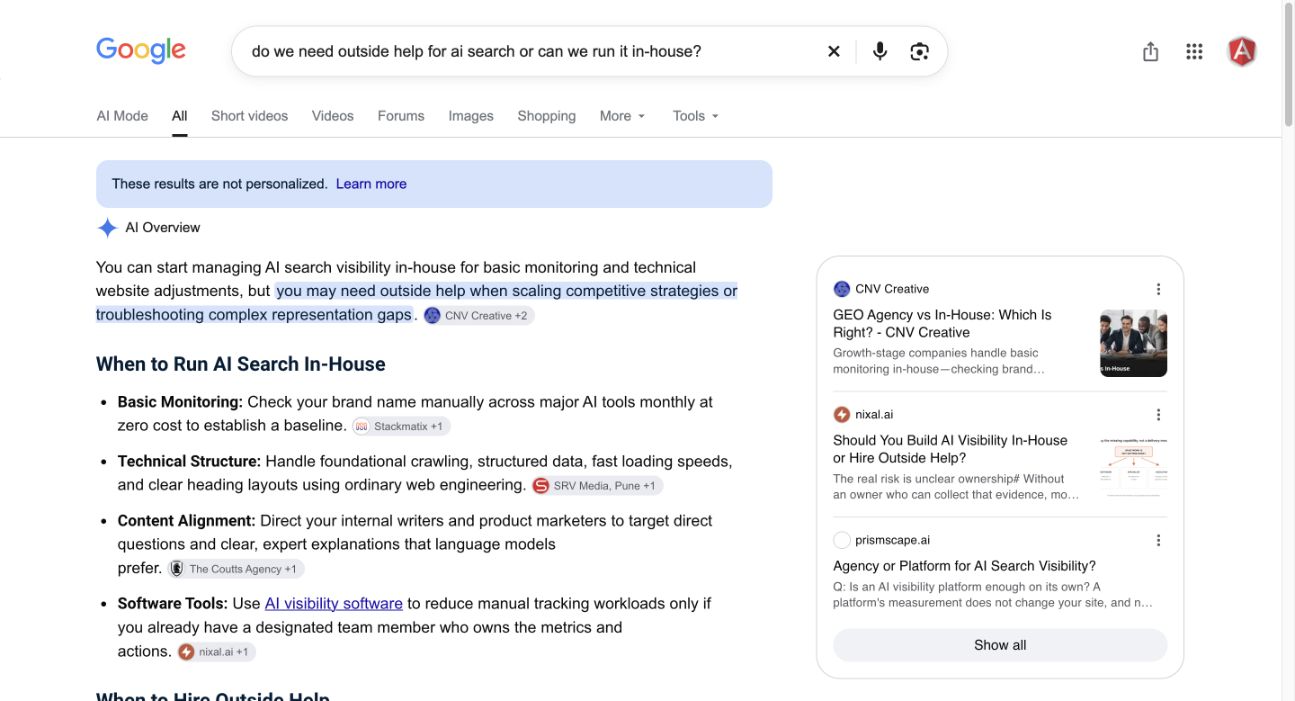
In our own work on Nixal, we have also seen results over a little more than 2 months. On September 30, 2026, our article on building AI visibility in-house or hiring outside help appeared as the #1 organic Google result (screenshot) in a non-personalized English search for "do we need outside help for ai search or can we run it in-house?" A September 29 screenshot also records the same article being cited in Google's AI Overview (screenshot) for that query. Together with published cases showing results within 4 weeks, that gives us a practical reason to review what has changed. If GEO work has produced little change after 2 months, we recommend auditing the existing website and the information behind the answers before continuing the same content plan.
| Team | What they changed | Reported result | Observation window |
|---|---|---|---|
| J.O.E. | Buying-question landing pages, existing articles, YouTube content, and an external guest article | Visibility across selected questions: 6.8% → 46.7% | 7 days, following preparation |
| Insynctive | Readable access and evaluation content, including 38 new pages | Queries surfacing the brand: 2 → 12 → 24, within the same 150-query set | Baseline → week 4 → week 6 |
| Asana | More than 200 existing pieces refreshed across 4 languages | Total AI citations: +71% | 33 days; initial improvements reported within 2 weeks |
J.O.E.: address buying questions and see changes within a week#
Jaeckert & O'Daniel ran a GEO project for J.O.E., its own AI visibility tool. The team reported visibility rising from 6.8% to 46.7% across its selected questions in 7 days, with new landing pages appearing in AI answers on day 3.
They began with buying questions about finding an AI visibility tool, adding needs the product could serve, such as competitor analysis. They examined relevant sources and content gaps, then published landing pages, updated articles and YouTube content, and placed an external guest article. The changes were concentrated after a preparation phase. Case study
The useful lesson is that the content work addressed specific questions. For the B2B company, that leads to a closer look at its 3 weekly articles: which buying needs do they answer? Do existing pages explain the services, use cases, and business boundaries customers need to understand?
Insynctive: fix readable access and add evaluation content#
Resonate Labs, the team working with B2B HR software platform Insynctive, reported that the old site returned an empty HTML shell to the crawlers it checked. The team fixed that access problem and built readable pages around buying queries, publishing 38 pages.
Across the same 150 queries, those surfacing the brand increased from 2 at baseline to 12 at week 4 and 24 at week 6. The case also describes an evaluation question about the platform's limitations: the team created relevant pages, which the answer cited at the 4-week review. Case study
That adds a useful check for the company in the original post: are its key business descriptions readable, and do pages cover the information customers need when evaluating the service? Checking those materials helps determine whether the next task is a technical correction or a content addition.
Asana: refresh existing content for short-term changes#
AirOps reports that some of Asana's international articles had gone untouched for years. The team refreshed more than 200 pieces across 4 languages, addressing redundant introductions and headings, data placement, and completeness while adapting content to local customer needs.
The case says improvements began within 2 weeks of publication. Its detailed figures use a 33-day observation window, with total AI citations increasing 71%. Case study
This offers another route for content work: check whether existing articles and service pages are outdated, incomplete, or missing current customer needs. Pages worth refreshing can become the starting point for the next round of work.
For this company, start with the wrong category#
The cases describe different actions: J.O.E. addressed buying-question content and source gaps; Insynctive fixed readable access and added evaluation pages; Asana refreshed existing content.
Our recommendation is to audit the existing website and let the findings shape the next round of content work. A service page may need a more accurate description, an older article may need refreshing, and an important customer question may still lack content. Finding those gaps helps determine which pages to change first and what information to add.
The company in the original post already has a specific lead: AI gets its category wrong. We would save the incorrect answers, examine the visible citations, and compare business descriptions on the website, Clutch, industry directories, and press releases. Check whether the category, customers, and actual services are clear, and look for old descriptions, category confusion, or information from similarly named businesses.
If a description is wrong or unclear, update the relevant page. For third-party information, contact the owner to correct the specific facts. When an answer has no source links, those known profiles can still be checked for matching or similar errors. Our article on companies appearing in AI search with an incorrect answer covers that investigation in more detail.
Then choose actual service-buying and evaluation questions and examine the answers and relevant pages. What is missing: the business description, service boundaries, use cases, or delivery evidence? Update existing pages where they can address the gap. Create a page or article when the necessary content is missing. Questions received by sales and support can help choose that content.
After the changes, revisit the questions that produced errors and related buying questions. Check what changed in category accuracy, service descriptions, citations, and recommendations.
Start the next round of content work with an audit#
J.O.E., Insynctive, and Asana took different approaches, but each offers a concrete direction: add content that buying questions require, make important pages readable, or refresh articles left untouched for years. Short-term changes have happened, and these cases also point to useful places to examine and improve an existing website.
For the company in the original post, the wrong industry category is the starting point for that review. Check the descriptions on the website and relevant business profiles, correct existing pages, and fill the information customers need to evaluate the service. That gives future article topics a clear basis.
Audit the existing website first, then refresh and fill the content gaps. Start the next round of GEO work with a problem you have found and have a reason to solve.