Tracking AI Mentions
How do you know whether AI mentions your brand, and can you trust the numbers?
Short answer
Start with the questions buyers actually ask before choosing, run each one more than once on every platform that matters, and record who was named and which sources were shown. Do that before buying a tool. A single visibility score cannot be trusted until you have seen the variance underneath it: in our tests the same query produced different visible sources across platforms and across repeated runs, and tools define the score differently.
The articles below cover how to choose the query set, how many runs a claim needs, what an AI visibility score does and does not measure, and why a citation count says nothing about who owns the cited source.
Read
Set up the measurement
 Use Voice of Customer to Choose Which AI Search Queries MatterUse Voice of Customer as the starting point for AI search tracking, then use search data, product priorities, market language, and platform signals to test and expand the query set.
 How Many Times Should You Run the Same AI Search Query?There is no defensible universal repeat count. 3, 5, 10, or 100 runs do not become reliable simply because the number sounds substantial. The sample should match the decision you need to make.
Read
Read the numbers
 AI Visibility Measurement: Your Score Went Up. What Actually Improved?An overall AI visibility score is not enough to judge whether the work is helping. Check what it measures and what changed in relevant answers; measure visits and inquiries separately.
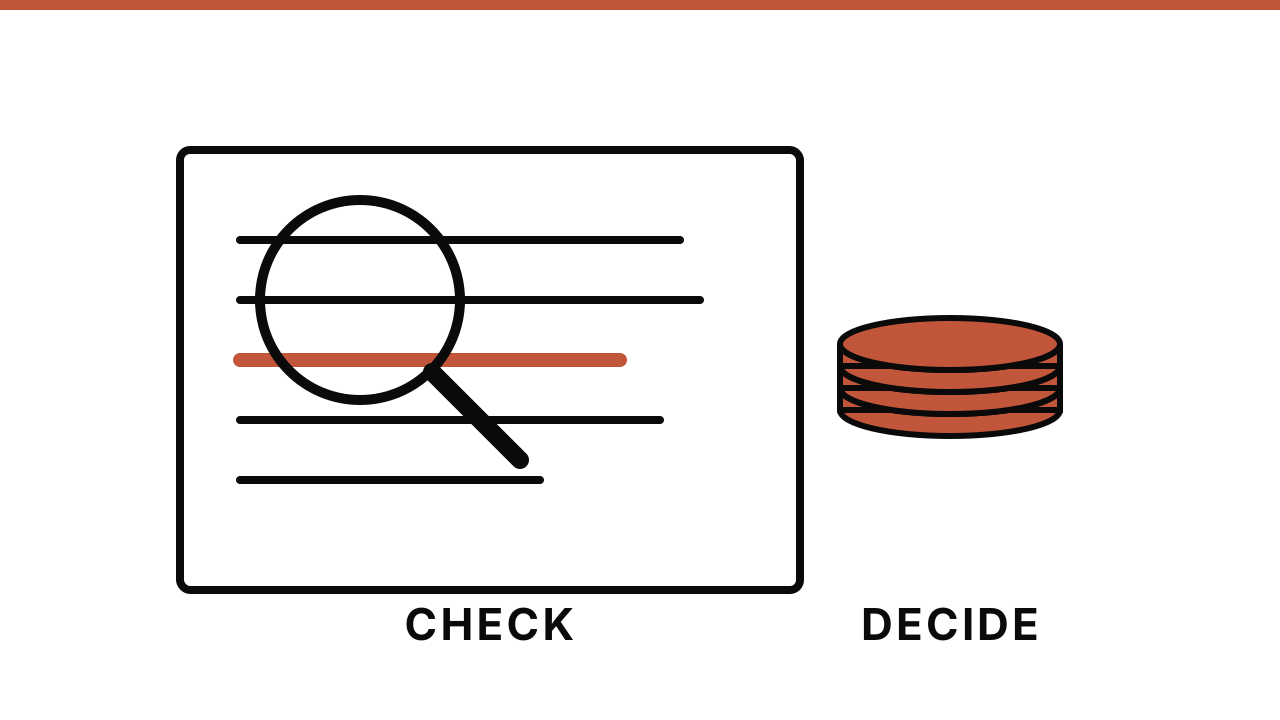 AI Rankings Keep Changing. What Should You Do Next?An AI answer can cite your page and still leave your brand out. Before spending more on content, check what the answer actually says and whether it addresses a customer need your business can serve. Monitoring should help you choose the next action.
 ChatGPT vs Perplexity Citations: Same Query, Different SourcesThe same provider-selection query produced largely different visible source sets in the tested ChatGPT and Perplexity experiences. See why AI visibility should be measured by platform, mode, query, and repeated run — not collapsed into one score.
 AI Citation Counts Hide the Commercial Interests Behind the SourcesA manual review of 62 cited domains shows why companies need to examine publisher ownership and commercial relationships — not just count AI citations.
Updated
Want to know where your company stands on this question?
Get in touch with us →